

About us…
We believe mental health care should be accessible, affirming, and built around the whole person…not simply a diagnosis.
Our organization brings together compassionate, highly trained mental health professionals who provide therapy and creative, community-centered services for individuals with a wide range of experiences and needs. We are particularly passionate about creating welcoming spaces for neurodivergent, LGBTQ+, disabled, and underserved communities, as well as anyone who has felt misunderstood or out of place in traditional mental health settings.
As a nonprofit organization, our work extends beyond individual therapy. We are committed to expanding access to mental health care, reducing barriers to support, and exploring creative approaches that help people connect, communicate, cope, and thrive. Through therapy, art therapy, groups, community programming, and partnerships, we work to create opportunities for people to receive support in ways that feel meaningful and accessible to them! Art is meant for everybody and every body!
Our Approach
We believe there is no single way to heal, communicate, or experience therapy. Our clinicians draw from evidence-based therapeutic approaches while adapting care to each individual's goals, communication style, strengths, identity, and needs.
You don't need to have the right words. You don't need to know exactly what you need. And you don't need to change who you are to fit into our space.
We meet you where you are and work with you to create care that feels safe, collaborative, and genuinely human. Because being YOU is important.
Our Mission
Our Mission is to make our community a more accessible, affirming, and creative place where people feel seen, supported, and empowered.
We envision a world where services are not limited by income, disability, identity, communication style, or traditional ideas about what healing is supposed to look like.
We strive to give people the opportunity to heal, grow, explore, and be witnessed through the power of art.
What is art therapy?
FAQs!
-
Talk therapy: Primarily uses conversation to explore thoughts, emotions, behaviors, relationships, and experiences.
Art therapy: Art therapy can help people in all the ways that traditional talk therapy can, but utilizes creative visual expression as the primary tool. Words may not always be enough, and oral communication can be difficult. Putting emotions, thoughts, and experiences into a piece of art makes them tangible, physical items that are separate from the client. This separation aids in the processing of what is expressed.
Art therapy can engage different ways of processing.
For people who think visually, communicate differently, experience alexithymia, are neurodivergent, or simply find it easier to express themselves creatively, art can offer a meaningful alternative or complement to verbal communication.
You don't have to choose between talking and making art.
Art therapy can look different from session to session, and your therapist will work with you to determine what is most helpful.
-
An art therapist is a mental health professional. They are not an art teacher, but can help teach various ar techniques in session. They use their clinical training to help you:
Explore and communicate emotions
Develop emotional regulation and coping skills
Process difficult experiences at a pace that feels manageable
Explore identity, relationships, and life transitions
Build self-awareness and self-esteem
Identify patterns that may be difficult to recognize through conversation alone
Use creative and sensory experiences to support grounding and regulation
Find new ways to communicate when words aren't enough
Connect therapeutic goals with meaningful, personally relevant creative activities
-
Art therapy puts emphasis on the process rather than the product. The art created in sessions is less about the artistic outcome than it is how the client expresses themselves. The client will learn proper use of materials and art techniques like in a class, but there is no "right" or "wrong" way to participate in art therapy.
-
Art Therapists need a minimum of a Master's Degree in the field to practice. All of our staff at Art People are Registered Art Therapists, which means that they have completed post-graduate direct client contact hours with supervision. Some of our staff also have Board Certification and state specific licensure, which means that they have passed the Board Exam. Our staff at Art People are all also Licensed Professional Counselors, or Associate Licensed Professional Counselors. You can view our staff here.
-
At Art People, we offer a wide variety of Art Therapy services for children, adolescents, and adults.
-
The large answer is, well, everybody! Art Therapy can be beneficial for all diagnoses and populations that traditional talk Therapy is used with.
-
There is no artistic skill required, and there is no "right" way to make art in therapy. Your artwork isn't being graded, and your therapist isn't looking for hidden meanings in every color or shape. The meaning comes from you and your own experience - not from a therapist interpreting your artwork like a test.
-
We use many traditional art media at Art People, such as pencil, collage, watercolor, marker, paint, clay, etc., but we also introduce "out of the box" art supplies often. Even experienced artists may learn new techniques in the process!
-
Art Therapist are trained to look at artwork curiously and ask questions that allow the artist to personally reflect. The artist's own exploration and "interpretation" is much more important than any arbitrary meaning that the Art Therapist could assign to the work.
-
The art made in art therapy sessions belongs to the client, and they get to choose what to do with it. If the artist would like to keep it at Art People, we will make sure it is safe and secure. Unclaimed art is stored safely in accordance to the American Art Therapy Association Code of Ethics.
-
None of the artwork is shared outside of the session without the written consent of the client or guardian. The only time something created or discussed in a session would be shared without consent is if the client or another person is in danger. This policy is reviewed in more detail before starting Art Therapy in our client contract.
-
This is a complex question that is often discussed in the mental health world. As a guardian, you have the legal right to know what happens in Art Therapy sessions. That being said, for Art Therapy to be effective, a person must be able to disclose information without fear of judgment. Confidentiality makes clients feel safe and helps build stronger a therapeutic relationship. Generally, the Art Therapist will have an open discussion with the client about what will be shared with the parent/guardian before communicating that information.
Our values:
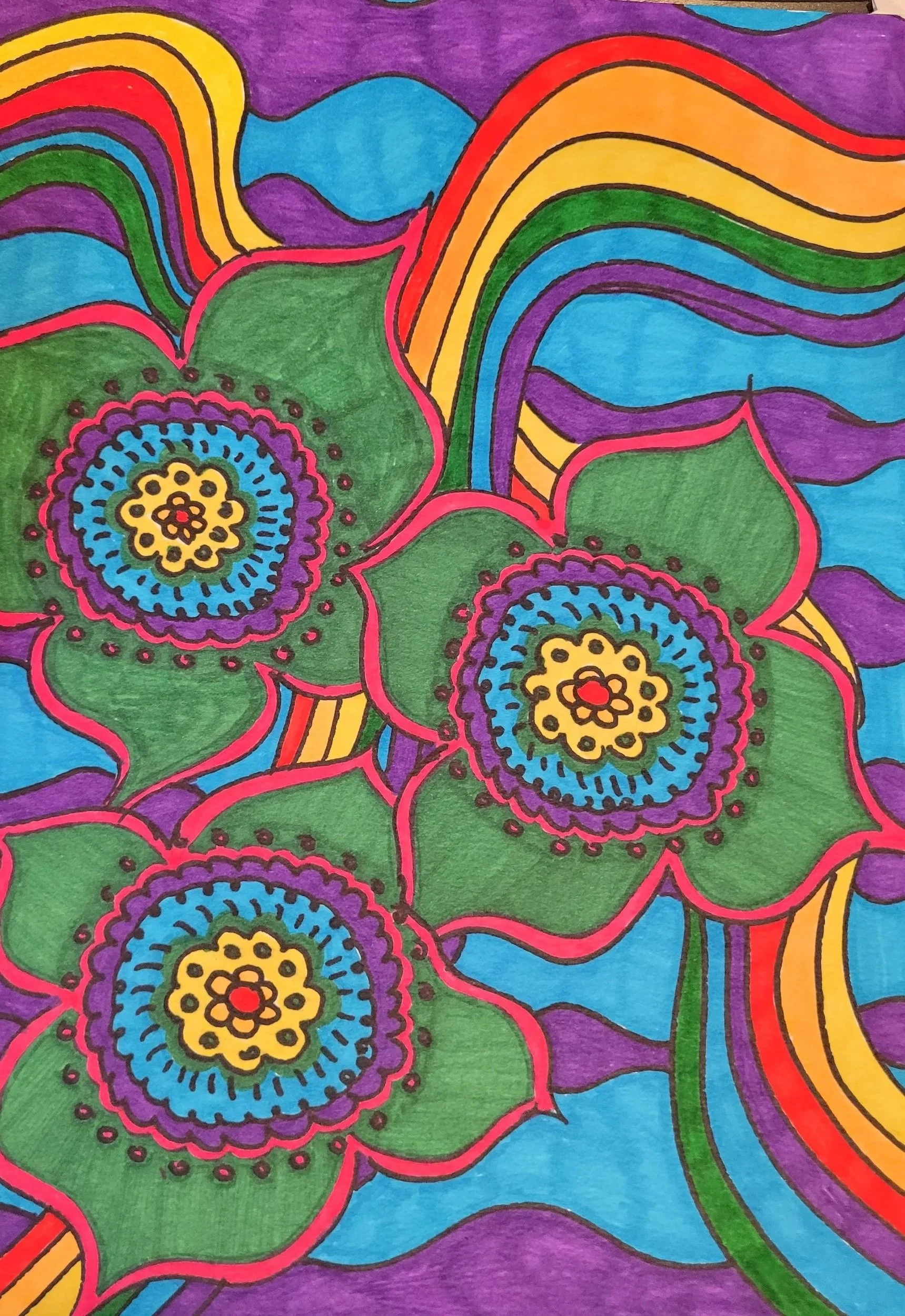
People- We are all people worthy of respect and dignity
Art- We are all artists (that means YOU!)
Openness- We keep our minds and our hearts open to new experiences
Community- We are stronger together
Professionalism- We hold ourselves to high levels of accountability and integrity
Personality- We are always our authentic selves
Ready to try out some art in your healing process?
Fill out some information here and we will get back to you!